





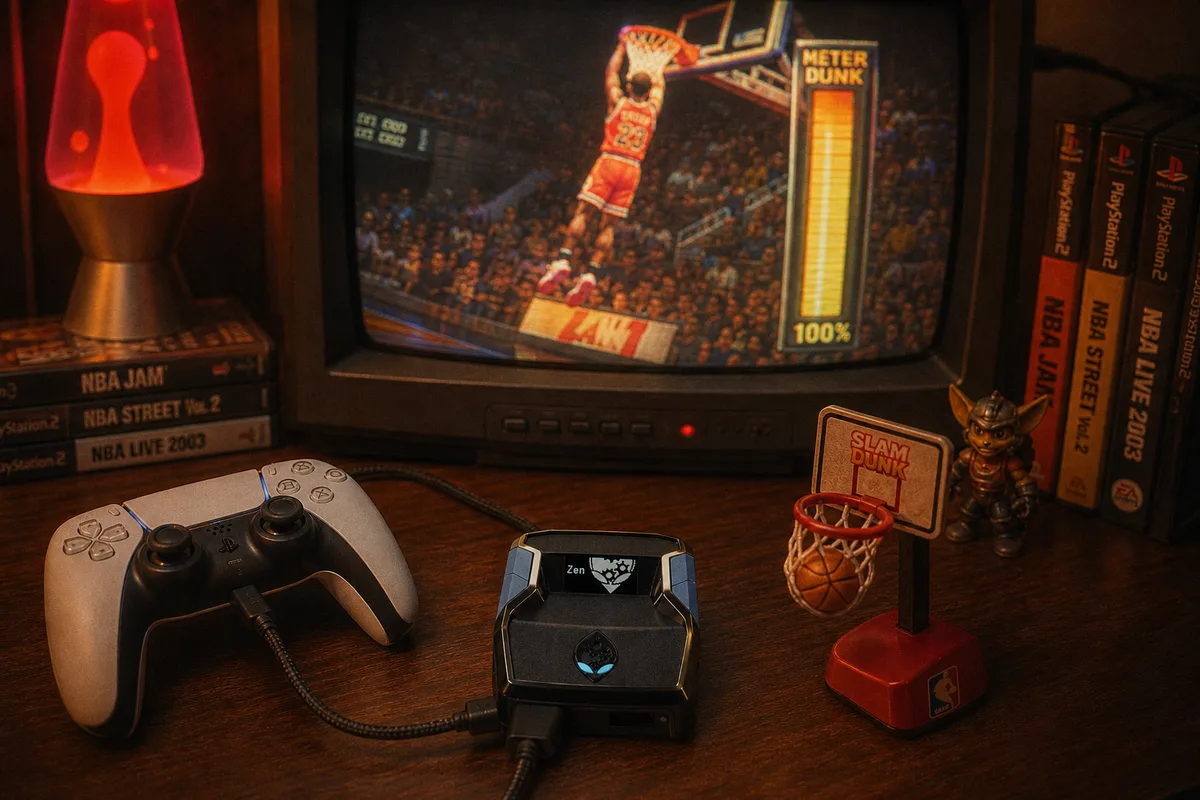
The dunk meter is NBA 2K26's most honest trade: hold the stick, watch the bar climb, release in the target zone — and in exchange you get contact animations that finish through defenders who would block or bump a regular layup. Nail it and it's two points plus a demoralized rim protector. Miss it and you've bricked a dunk, usually straight into a transition break the other way. That risk profile is exactly why Meter Dunk is one of
Green's 14 mods.
How Meter Dunks Work in 2K26
Not every dunk is metered. Open lanes with a clean runway typically produce automatic dunk animations — no meter, no risk. The meter appears when you force an aggressive finish: holding the right stick through a contest, attacking a protected rim, going up through contact. The game hands you a skill check in exchange for access to its strongest finishing animations.
The check itself is tight, and it's tight in a specific way that makes it hostile to manual timing:
- The target zone is small — a narrow slice at the top of the bar.
- Fill speed varies. Different dunk animations fill the meter at different rates, so muscle memory from one animation betrays you on another.
- It happens in maximum chaos. You meter-dunk in traffic, mid-collision, with a shot-block animation swinging through your screen — the worst possible conditions for precise manual release.
- Latency applies. Like every timing check, the release is graded where it lands in the game timeline, not where you perceived the bar. On a spiky connection the zone is effectively moving — the same chain covered in the latency breakdown.

What the Mod Does
Meter Dunk handles the release. You drive, pick your moment, and trigger the dunk with the stick as normal; when the meter engages, the script times the release into the target zone at the hardware layer — reading the animation in play rather than guessing at one universal fill speed. The console sees a standard controller releasing a stick input at the right moment. That per-animation awareness is the point: a static timing would only ever be right for one dunk animation, and 2K26 has many.
What stays yours is everything before the meter: reading the lane, choosing when an aggressive finish beats a safe layup, and triggering the attempt. The mod converts execution risk to roughly zero; the decision-making is still the skill.
When to Force the Meter On Purpose
Most players treat the meter as something that happens to them. With the timing solved, it becomes something you choose — because metered contact finishes convert situations where a regular layup gets eaten:
- A rim protector is home. The layup gets blocked; the contact dunk goes through their body. This is the single biggest swing the mod creates.
- Fast breaks with a chaser. The trailing defender who would poke a layup free is irrelevant to a dunk animation.
- Switch mismatches in the paint. A small guard switched onto your wing or big is a metered dunk waiting to happen — the same mismatch logic as posting up, resolved faster.
In Pro-Am specifically this matters, because organized defenses concede interior contact finishes before they concede open threes — the mode-by-mode logic is in Park vs Rec vs Pro-Am.
Building Around It
One honest limit: ratings gate access. Driving dunk and vertical requirements decide which contact animations you can equip and trigger. Meter Dunk perfects the execution of whatever your build can attempt — it cannot make a 40 driving-dunk build throw down contact dunks. This is why our builds guide for script users routes surplus attribute points into finishing: the script removes the timing risk, so every point of dunk rating converts directly into more triggerable animations with zero execution downside. Finishing investment has never been safer.
Part of the System
Meter Dunk ships in Green with the other 13 mods — AI Auto-Green, Button Tempo, Infinite Stamina, AI Defense, Turbo Fades, Quick-Stop, Auto-Dribbles, and more — for $50 one-time with free weekly updates for life. The pairing that matters most: Infinite Stamina keeps your bar full, which keeps your drives explosive enough to reach dunk range in the fourth quarter, and Auto-Green makes defenses respect your jumper enough to open the lane in the first place. Perimeter gravity plus a solved dunk meter is the pick-your-poison offense every build wants.

