Guides live in each server's channel list, sorted by game.
SaleUse code GG for an extra 10% off
blog
NBA 2K26
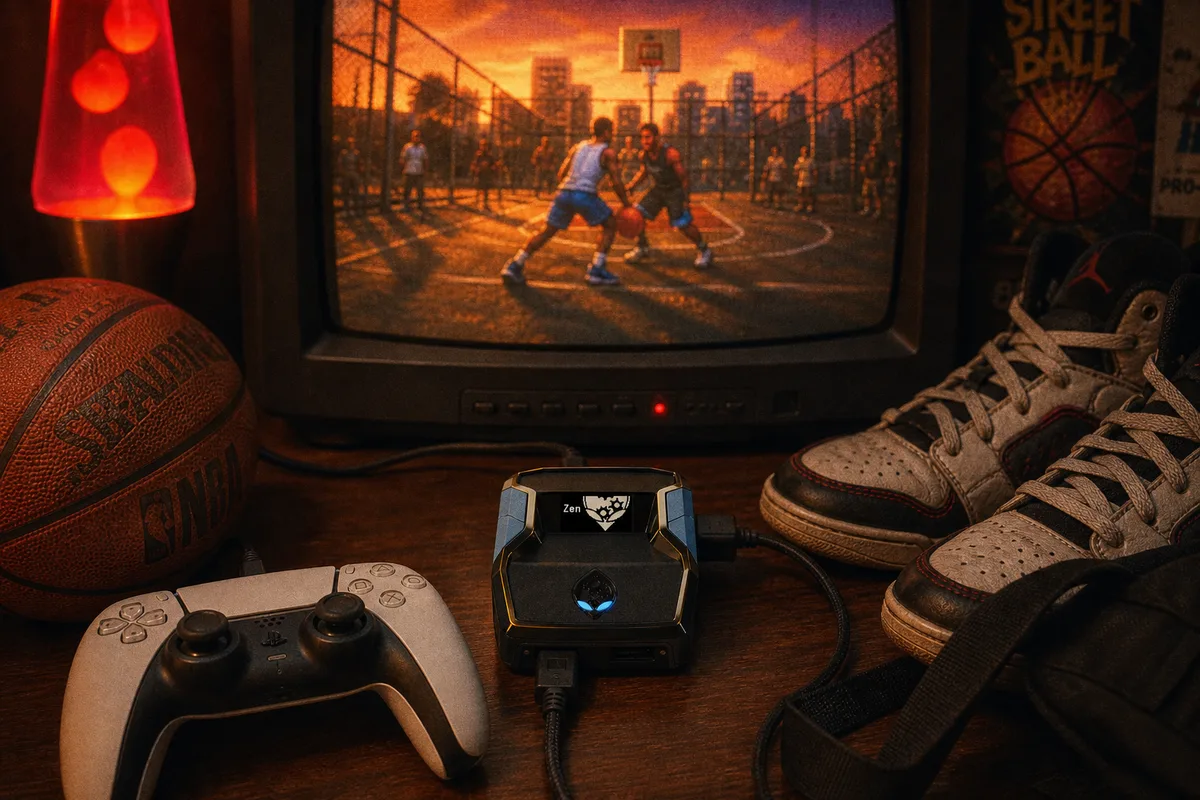
Park vs Rec vs Pro-Am — Where Cronus Zen Scripts Help Most
The same script plays very differently in 3v3 Park, random Rec, and organized Pro-Am. Here is the mode-by-mode breakdown of which Green mods carry each one.
Buyers ask me some version of this every week: "I mostly play Rec — is Green still worth it?" or "does Auto-Green even matter in Pro-Am where everything's contested?" Fair questions, because the three main online modes in NBA 2K26 stress completely different parts of a script. Same $50 script, same 14 mods — very different value curves. Here's the honest mode-by-mode answer.
Park (2v2 / 3v3): Maximum Script Leverage
Small-sided Park games are where Green feels most unfair, for structural reasons:
You take more shots. Three players split the possessions instead of five. More attempts means the gap between a timed release and a mistimed one compounds faster.
Isolation is the meta. Park is 1v1 with help lurking. Turbo Fades and Auto-Dribbles create separation on an island, and Auto-Green punishes the sliver of space they create.
No help rotations. In 5v5 a beaten defender has four teammates. In 3v3, beat your man and the shot is open — and open shots are exactly where Auto-Green converts at its best, because the green window is at full size.
Stamina management also decides Park games more than people admit. Back-to-back games, constant sprinting, dribble spam — by game three a manual player's window is shrunk before the defender even closes out. Infinite Stamina keeps the bar and therefore the green window at full size all session.
Random Rec is chaos — you don't pick your teammates, your role changes every game, and you might see eight shots one game and twenty the next. What carries in Rec is consistency across whatever the game gives you:
Auto-Green on limited attempts. When you only get ten looks, converting the open ones is the whole game. A script doesn't have cold streaks, and it doesn't tighten up when the game is close.
AI Defense earns its slot here. Rec randoms hunt weak defenders in switches relentlessly. Green's AI Defense reads the ball handler's state — shooting, driving, posting — and reacts with contests and positioning. Nobody targets you twice. Full breakdown in the AI Defense guide.
Quick-Stop off screens. Rec offense flows through pick-and-roll and off-ball movement. Quick-Stop kills your momentum instantly into a stable shot, which turns sprinting off a screen directly into a clean release.
Rec is also the mode where playing on a script keeps games fun when your team is losing by 20 — you still get your looks, you still green them.
Pro-Am against organized squads is the ceiling: real rotations, disciplined closeouts, shot pressure on everything. Two things are true here at once:
Your open looks are rarer. Good teams give up maybe a handful of genuinely open catch-and-shoot threes per game.
Which is exactly why converting them all matters. When a possession-limited game produces four open looks, going four-for-four with Auto-Green versus two-for-four manually is frequently the margin of the game.
Pro-Am is also where the marginal mods earn their keep. Turbo Fades gets a clean shot off against a defender who never leaves your hip. Meter Dunk converts the interior looks that good defenses concede instead of threes — covered in the meter dunk guide. And Button Rhythm appeals to Pro-Am players who want to keep shooting manually with stabilized rhythm rather than full automation.
Auto-Green, AI Defense, Quick-Stop, Infinite Stamina
Consistency across random roles, switch-hunting defense
Pro-Am
Auto-Green, Turbo Fades, Meter Dunk, Button Rhythm
Rare open looks must all convert; heavy contests
So Which Script Should You Buy?
All three modes are served by the same products. Green is the answer for most players — all 14 mods, tuned to your build through the generator. If you split time across modes and want zero configuration, Hoops is pre-tuned plug-and-play with the same core Auto-Green quality. Both are $50 one-time with free weekly updates included — no subscription, no per-mode upsells. Watch the demos side by side and pick the setup style you prefer.